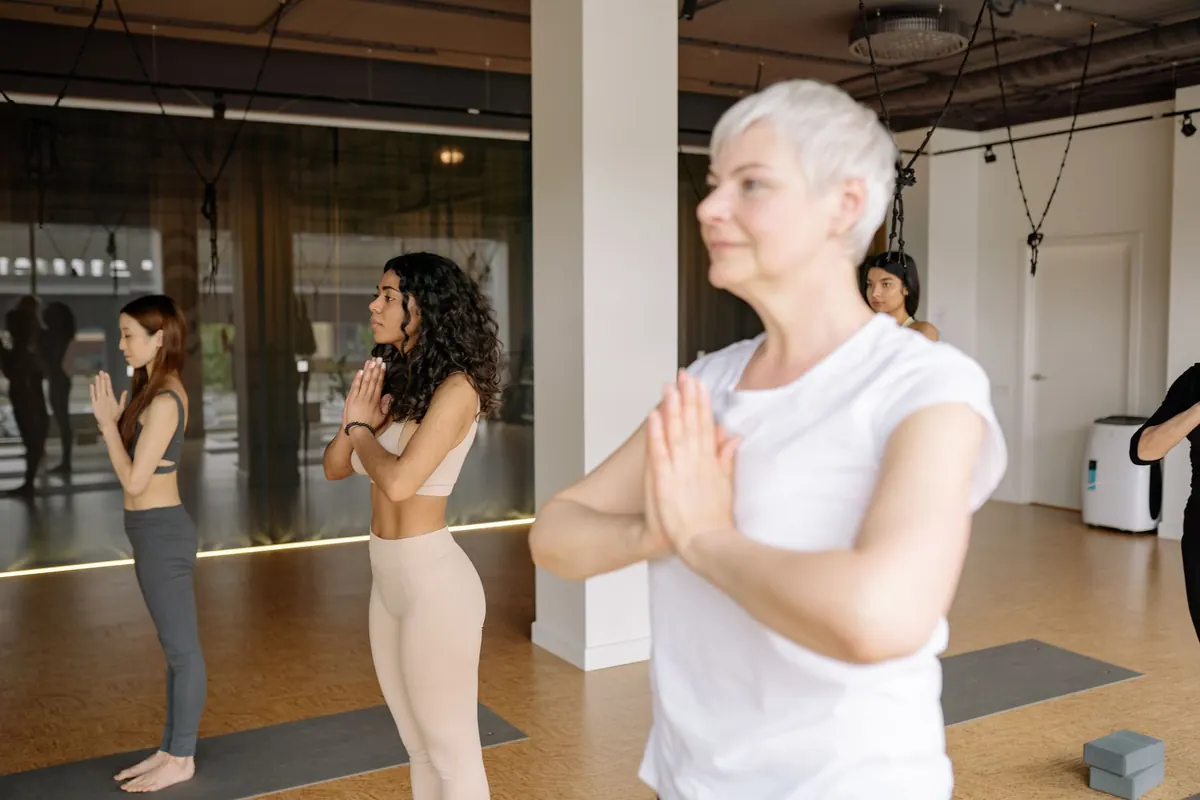
Three classes, three very different hours. A yoga studio is warm and hushed, and you spend most of the session barefoot on a mat, folding and unfolding in time with your breath. A Pilates class is quieter still, but busier — tiny movements, precise instructions, and a deep burn that arrives out of nowhere somewhere around the third set of leg lifts. A strength session tends to be louder: clanging plates, mirrors, and a coach who wants to know how your squats felt last week.
None of them is the right choice for everyone. What matters is what you want your body to do, how you like to be taught, and whether you will actually turn up again next Tuesday. Here is what each class involves, who tends to settle into it fastest, and what to expect the first time you walk through the door.
Most beginner classes run for an hour and follow a similar shape: a warm-up, standing postures, some work on the floor, and a few minutes lying still at the end. Styles differ more than the names suggest. Hatha tends to be slower, with poses held for several breaths. Vinyasa links movements together and moves faster. Iyengar uses blocks, straps and bolsters to help you find the shape. Yin holds stretches for a long time and can be surprisingly intense.
You will be asked to breathe in specific ways, and you will probably be asked to close your eyes at least once. Beginner classes usually explain the poses rather than assuming you already know them. Props are not a cop-out; a block under your hand is often the difference between a pose that works and one that hurts.
Pilates comes in two main forms. Mat classes happen on the floor using your own body weight, sometimes with small equipment such as a ring or a band. Reformer classes use a spring-loaded carriage, which supports you and adds resistance; these are usually smaller groups and often cost more.
The work is small and controlled. You might spend five minutes on breathing and rib position before doing anything that looks like exercise. Expect correction — a good teacher will adjust your shoulders, your pelvis, your feet. You may not sweat much, but your muscles will shake, and your stomach will feel as though it has done something the next day. If you have back pain or have recently had a baby, mention it before class; Pilates is often suggested for both, but the details matter and are worth checking with a health professional first.
A beginner strength class usually teaches a handful of big movements — squat, hinge, push, pull, carry — with a light weight and a lot of coaching. Expect a warm-up, some technique drills, then a few working sets with rest in between. The teacher will probably ask you to note down what you lifted so you can build on it next time.
You will be sore. Not always, and not badly, but the first two or three sessions often leave you stiff for a day or two. That eases as your body adapts. What matters early on is technique, not load: adding weight before you can move well is the quickest way to end up injured.
Arrive ten minutes early. Tell the teacher you are new and mention anything they should know: a dodgy knee, a shoulder that clicks, a pregnancy. Good teachers offer a variation rather than making you feel singled out.
Kit is simple. Comfortable clothes you can move in, a water bottle, and trainers for strength work. Studios usually lend mats, blocks and straps, and reformer classes often provide grip socks or ask you to bring some — check when you book. For weights, avoid very loose trousers if you are using a barbell, and wear flat, stable shoes rather than spongy running trainers.
Cost varies widely by city, studio and class size. A gym membership may include classes; specialist studios often charge per session, and beginner courses usually work out cheaper per class than drop-ins. Where you can, book a short course rather than a single class. Seeing the same teacher for four or five weeks makes a bigger difference than shopping around.
"I'm not flexible enough for yoga." "I'll look stupid in a weights room." "I don't have a core to do Pilates."
Everyone in a beginners' class is somewhere on the same scale. Yoga classes are full of people who cannot touch their toes; that is exactly what the class is for. Strength sessions are full of people learning to squat properly, and the mirrors are there for form, not judgement. As for Pilates, the whole method is designed to build control from wherever you are starting.
One useful rule: discomfort is normal, pain is not. If something pinches, stings or feels wrong, stop and ask. Any teacher who tells you to push through it is not the teacher for you.
If you are pregnant, recovering from injury or surgery, or managing a long-term condition, speak to your GP, a physiotherapist or a qualified instructor before you start. That conversation is worth more than any comparison table.
Photo: Yan Krukau / Pexels

Rain in Brighton is no washout. A local's guide to the best cafés, markets, museums, shops and cinemas for a wet day trip.

Interval, matinee, understudy, front of house: a plain-English guide to the words you'll meet on a British theatre...

October is when British cooking turns golden: squash, orchard fruit, roots and dark leafy greens. Here's what to buy...

Fresh breezes of culture and ideas..
