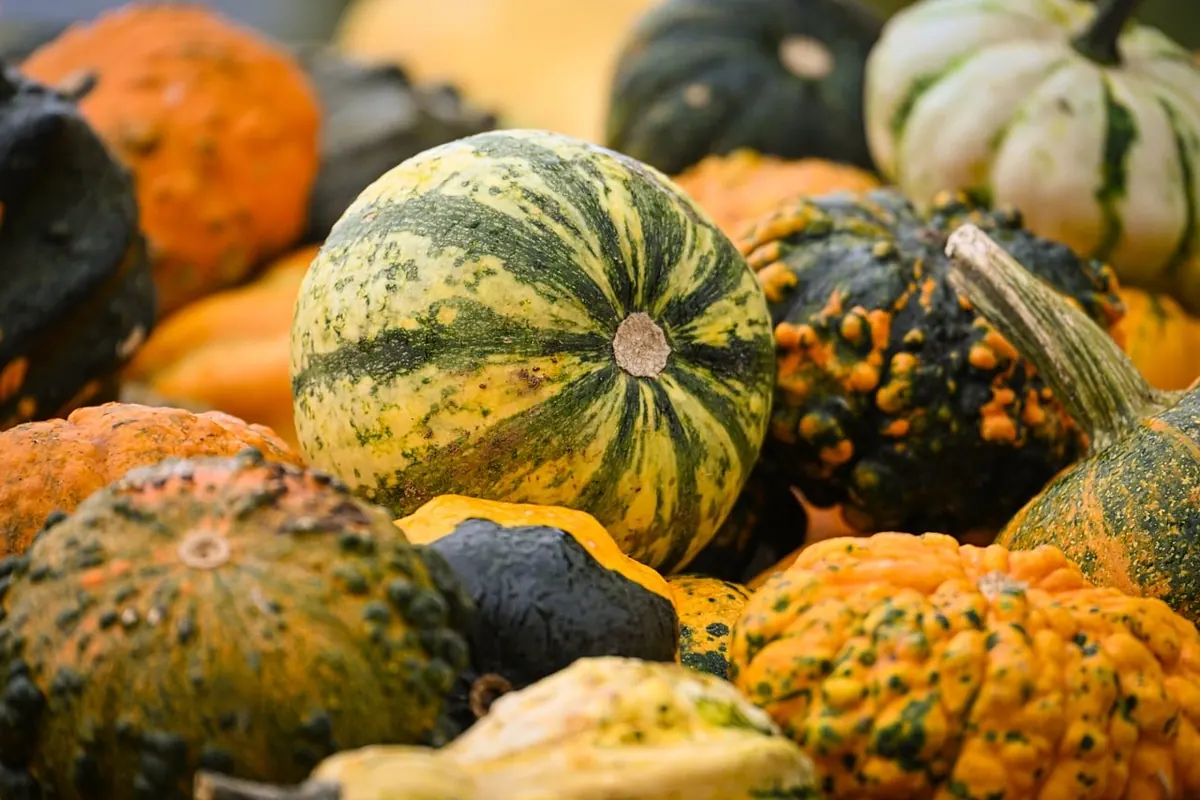
October is the hinge of the British food year. The tomatoes are down to their last few, the runner beans have gone stringy, and the courgettes are only worth having if you pick them small. In their place come the cooking apples, the first proper squashes, and root vegetables that have spent the summer underground quietly getting sweeter. The greens get darker and more interesting too — cavolo nero, curly kale, the first tight Savoy cabbages.
Cook with what is good right now and you barely have to do anything to it. A little fat, a little heat, a squeeze of lemon. That is more or less the whole trick for the next six weeks.
This is the best moment of the year for squash. Look for Crown Prince, Delica, red kuri, kabocha and good butternut — dense, dry-fleshed varieties that roast into something nutty rather than watery. The big orange pumpkins sold for carving are a different vegetable entirely; fine for lanterns, disappointing on a plate.
The reliable method: halve the squash, scoop out the seeds, rub the cut sides with oil and salt, and roast cut-side down at around 200°C until a knife slides in without resistance. For a small squash that is roughly half an hour; for a large Crown Prince, closer to an hour. Don't rush it — undercooked squash is stringy and dull.
From there, almost anything works. Fold roasted cubes through a risotto with sage and a lot of grated Parmesan. Pile them onto a tray with red onion, chickpeas and ras el hanout. Blitz with ginger and stock for a soup that needs nothing but a swirl of cream. The seeds are worth keeping: rinse off the pulp, dry them, toss with oil and salt, and roast for ten to fifteen minutes until they start to pop.
Whole squash keeps for weeks in a cool, dark, dry place — a cupboard floor is better than the fridge. Once cut, wrap it and use it within a few days.
Cox and Egremont Russet are at their peak, with Bramleys arriving for cooking. Pears are trickier than apples because they ripen from the inside out: a pear that feels soft around the middle is usually already past it. Press gently near the stem instead. If that gives slightly, it is ready.
Simple things suit them best. Core apples, stuff with raisins, cinnamon and a little soft brown sugar, and bake until the skins split. Make a crumble with blackberries, keeping the fruit in fairly large pieces so it doesn't collapse into jam. Poach peeled pear halves in red wine with star anise and a strip of orange peel, then reduce the liquid to a syrup.
For storing, wrap Bramleys individually in newspaper and keep them in a cool, dark place, ideally not in the same box as anything else. Apples give off ethylene gas, which speeds up the ripening of whatever sits beside them.
Parsnips are at their best after a few cold nights, which is when their starch starts turning to sugar. If the ones you buy taste a bit flat, roast them hard and the sweetness comes out anyway. Cut into batons, toss in oil, roast at 200°C for about half an hour, then brush with honey and mustard and give them five minutes more. Add the glaze any earlier and it burns.
Celeriac is ugly and worth the effort. Peel off the knobbly outside properly, then either shred it finely for remoulade with lemon juice, mayonnaise, Dijon mustard and capers, or wrap the whole thing in foil and bake for around an hour and a half, then scoop out the flesh and mash it with butter and black pepper. It is a gentler, more savoury alternative to mashed potato.
Beetroot roasts well in foil with a splash of water — anywhere from forty-five minutes to an hour and a quarter depending on size — after which the skins rub off easily with kitchen paper. Serve it with goat's cheese, walnuts and dill, or in a salad with orange segments and a sharp vinaigrette. Swede, meanwhile, does what it has always done: mash it with plenty of butter and black pepper beside sausages, or roast it in chunks with carrots and cumin.
Two more worth picking up: leeks, which should be sweated slowly in butter until soft rather than browned, and Jerusalem artichokes, which roast beautifully but can be uncomfortable for some people, so start with a small portion.
Kale and cavolo nero both need more than a quick wilt to be at their best. Strip the leaves from the tough stalks and discard the stalks. For a side dish, blanch the leaves for two minutes, drain well, then finish in a pan with sliced garlic, chilli and olive oil. For cavolo nero, a slow braise with garlic, a splash of stock and a lid on the pan for fifteen to twenty minutes turns it sweet and silky.
Kale also roasts into something crisp and savoury: tear it into pieces, toss with oil and salt, and bake at around 180°C for twelve to fifteen minutes. Stay nearby. It goes from crisp to acrid in about ninety seconds.
Savoy cabbage should be shredded finely, blanched, then finished in butter with caraway or a few crushed juniper berries — the right partner for pork, duck or game. Early Brussels sprouts arrive on the stalk towards the end of the month, and they are much better halved, tossed in oil and roasted cut-side down than boiled to grey.
Chestnut, oyster and shiitake mushrooms are excellent now, and October brings a lot of chatter about wild ones. If you cannot identify a mushroom with complete certainty, leave it alone. Do not trust an app, and do not trust a photo in a group chat. Buying from a greengrocer or a market stall where someone knowledgeable has already done the identifying is the sensible route.
With cultivated mushrooms, the most common mistake is overcrowding the pan. Start them in a hot, dry pan to drive off their water, then add butter once they squeak rather than steam. Sliced raw chestnut mushrooms with lemon juice, parsley and good olive oil is a genuinely underrated thing to put on toast.
October produce is generous, which means it is easy to overbuy. Greens are the first to suffer: wrap them in a clean tea towel or a slightly damp cloth and keep them in the fridge, then eat them within three or four days. Root vegetables want the opposite — cool, dark and dry, not the fridge, where they go soft and rubbery.
The most practical habit for the month is to cook in two big batches a week. Roast a tray of roots alongside whatever else is in the oven, then turn the leftovers into soup, a grain bowl or a warm salad with something sharp and something crunchy. Bruised apples become crumble or sauce; cooked squash and apple sauce both freeze well in portions, which takes the pressure off in November.
And if you are cooking for anyone with a health condition, or changing your diet significantly, it is worth checking with a GP or registered dietitian rather than taking a magazine's word for it.
Photo: Alexas_Fotos / Pixabay

Rain in Brighton is no washout. A local's guide to the best cafés, markets, museums, shops and cinemas for a wet day trip.

Interval, matinee, understudy, front of house: a plain-English guide to the words you'll meet on a British theatre...

Yoga, Pilates and strength training each ask something different of a beginner. Here's what happens in each class,...

Fresh breezes of culture and ideas..
